Over-the-Top Streaming Service: Complete Beginner's Guide
Master over-the-top streaming services with our beginner's guide. Understand OTT platforms like Netflix, launch your own, and stay ahead in digital media.
Getting Started
Sarah Chen
March 12, 2026 · 9 min read
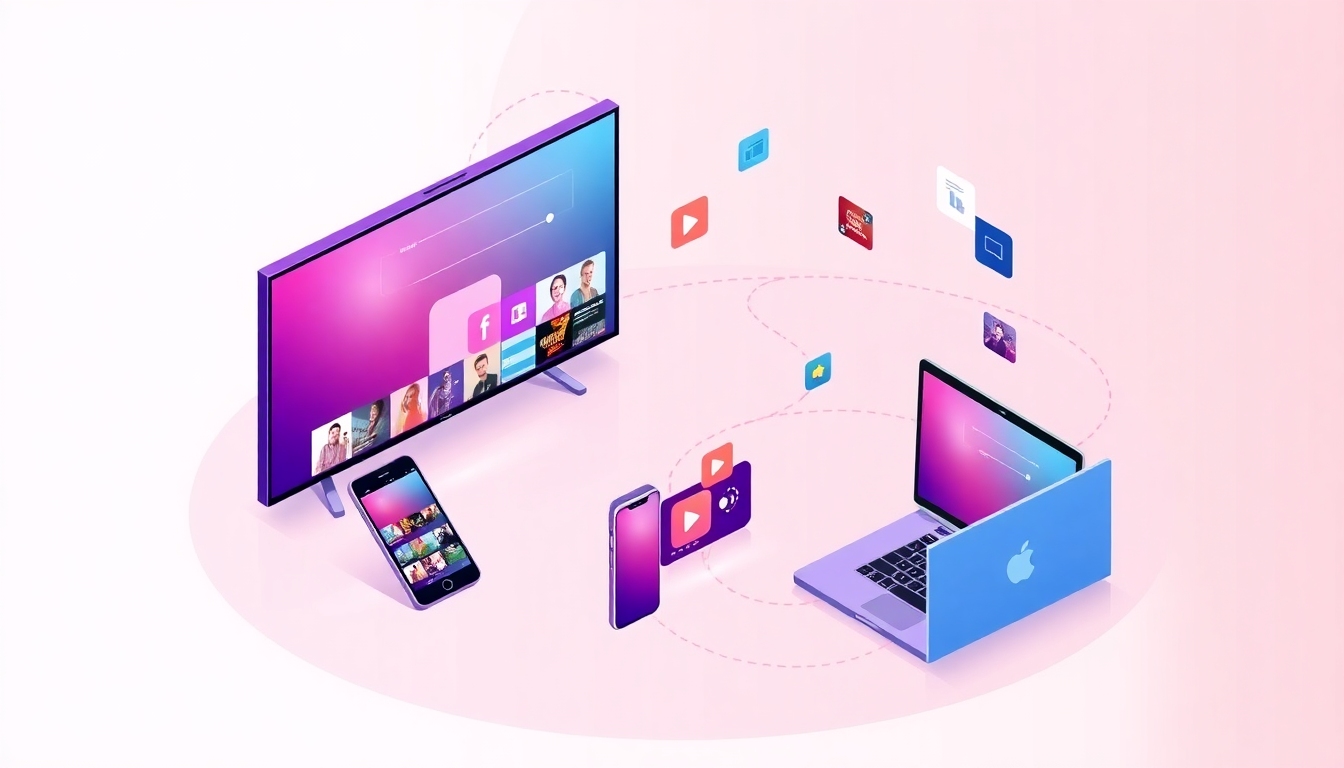
You’ve probably heard terms like Netflix, Hulu, or Disney+ thrown around, but what exactly makes these platforms different from traditional TV? Welcome to the world of over-the-top streaming services—a technology that’s fundamentally changing how we create, distribute, and consume video content.
Whether you’re a content creator exploring new distribution channels or simply curious about the technology behind your favorite streaming apps, understanding OTT is essential in today’s digital landscape. This guide breaks down everything you need to know about over-the-top streaming services, from basic definitions to how you can launch your own platform.
What is an Over-the-Top Streaming Service?
An over-the-top streaming service (OTT) is a video delivery platform that streams content directly to viewers over the internet, bypassing traditional cable or satellite television providers. The term “over-the-top” refers to how the content goes “over the top” of conventional distribution channels—you don’t need a cable box, satellite dish, or broadcast antenna.
Think of it this way: traditional TV requires you to subscribe to a cable company that controls what channels you get and when you watch. OTT streaming services deliver content directly through your internet connection, giving you complete control over what you watch and when you watch it.
According to Statista’s research, the global OTT video market is expected to reach over 1.8 billion users by 2027, demonstrating the massive shift from traditional broadcasting to internet-based streaming.
OTT Full Form in Cinema and Entertainment
The OTT full form stands for “Over-The-Top,” a term that originated in the telecommunications industry. In cinema and entertainment contexts, it refers to any video service that delivers content over the internet without requiring users to subscribe to traditional television services.
When you see “OTT full form Netflix” in searches, people are asking what makes Netflix an OTT platform—it’s because Netflix delivers content directly over the internet, not through cable or satellite systems.
How Over-the-Top Streaming Works
OTT streaming relies on three core components:
Content Delivery Networks (CDNs): These distributed server networks store and deliver your video content from locations closest to your viewers, reducing buffering and improving playback quality.
Adaptive Bitrate Streaming: The technology automatically adjusts video quality based on each viewer’s internet speed, ensuring smooth playback whether someone’s on a 5G connection or basic broadband.
Cloud Infrastructure: Video files are stored, processed, and transcoded in the cloud, eliminating the need for expensive on-premise servers and hardware.
When you upload a video to an over-the-top streaming service, it’s automatically transcoded into multiple resolutions (from 240p to 4K), stored across global CDN locations, and made instantly available to viewers on any device. This entire process happens behind the scenes without requiring technical expertise.
Pro Tip: Look for OTT platforms that offer multi-CDN support. Vidori uses both Cloudflare and AWS CloudFront with 200+ points of presence worldwide, ensuring your content loads quickly regardless of where your viewers are located.
What Does OTT Mean on Roku?
Roku is a streaming device that connects your TV to the internet, allowing you to access various OTT platforms through apps called “channels.” When you see “OTT” referenced on Roku, it simply means over-the-top streaming applications that deliver video content through your internet connection.
Your Roku device is essentially a gateway to multiple OTT services—Netflix, Hulu, YouTube, and potentially your own branded streaming channel. If you’re building a streaming business, creating a custom Roku app ensures your content is accessible on one of the most popular streaming devices, reaching Roku’s 70+ million active users.
Is OTT the Same as SVOD?
Not exactly, though they’re closely related. SVOD (Subscription Video on Demand) is a specific monetization model within the broader OTT category. Here’s how they differ:
| Term | Definition | Examples |
|---|---|---|
| OTT | Any video content delivered over the internet | Netflix, YouTube, Twitch, your streaming platform |
| SVOD | Subscription-based OTT service with recurring payments | Netflix, Disney+, HBO Max |
| AVOD | Ad-supported OTT service (free with commercials) | YouTube, Peacock Free, Pluto TV |
| TVOD | Transactional OTT (pay-per-view or rental) | iTunes, Amazon Prime Video rentals |
OTT is the delivery method, while SVOD, AVOD, and TVOD are different ways to monetize that delivery. According to Digital TV Research, global SVOD subscriptions will reach 1.79 billion by 2028, making subscription-based streaming the dominant monetization model.
Most successful creators combine multiple models—for example, offering a free AVOD tier to attract viewers while promoting a premium SVOD subscription with exclusive content. Vidori’s SVOD solutions support subscriptions, pay-per-view, bundles, and free trials, giving you flexibility to test different monetization strategies.
Top 10 OTT Platforms in India (and What They Teach Us)
India has one of the world’s most competitive OTT markets, offering valuable lessons for creators worldwide:
- Netflix - Premium international content with local originals
- Amazon Prime Video - Bundled with e-commerce subscription
- Disney+ Hotstar - Sports + entertainment combination
- ZEE5 - Regional language focus (12+ languages)
- SonyLIV - Sports rights + exclusive shows
- Voot - Free tier with premium upgrade option
- MX Player - AVOD model with strong regional content
- ALTBalaji - Creator-owned, niche content focus
- Eros Now - Bollywood-focused catalog
- hoichoi - Bengali language specialist
Key lesson for creators: Success in OTT doesn’t require competing with Netflix’s budget. The platforms that thrive understand their specific audience and deliver exactly what that audience wants—whether it’s regional content, specific sports, or niche genres.
Your advantage as an independent creator is specialization. You’re not trying to be everything to everyone; you’re building a dedicated streaming service for your specific audience.
Building Your Own Over-the-Top Streaming Service
The barrier to entry for launching an OTT platform has dropped dramatically. You no longer need a seven-figure budget or a development team—modern platforms provide everything needed to launch in days, not months.
Essential Features Your OTT Platform Needs
Multi-platform Apps: Your content should work seamlessly across iOS, Android, Roku, Fire TV, Apple TV, Samsung TV, LG TV, and web browsers. Vidori supports 16+ platforms out of the box, ensuring your subscribers can watch anywhere.
Reliable Video Delivery: Choose a platform with proven infrastructure. Look for adaptive bitrate streaming, global CDN coverage, and at least 99.9% uptime guarantees.
Flexible Monetization: Start with subscriptions, but have the ability to add pay-per-view events, tiered membership levels, promotional pricing, and free trials. Your monetization strategy should evolve as your audience grows.
Content Management: You need tools to organize videos into series, seasons, collections, and smart playlists. As your library grows, strong catalog management becomes essential for helping viewers discover content.
Analytics and Insights: Track viewer behavior, subscription patterns, revenue trends, and content performance. Data-driven decisions separate successful platforms from those that struggle.
Pro Tip: Pay attention to pricing structures. Some platforms charge per-subscriber fees that can cost $1-2 per subscriber monthly. At 1,000 subscribers, that’s an extra $1,000-2,000/month on top of your base fee. Vidori uses flat monthly pricing with zero revenue share—whether you have 100 or 10,000 subscribers, your platform cost stays predictable.
The Business Case for Launching Your OTT Service
Why should content creators build their own over-the-top streaming service instead of relying solely on YouTube, Vimeo, or Patreon?
Revenue Control: When you monetize through YouTube ads, the platform takes 45% of ad revenue. Patreon charges 8-12% plus payment processing fees. Your own OTT platform means keeping 100% of subscription revenue minus payment processing (typically 2.9% + $0.30 per transaction).
Direct Audience Relationship: YouTube or Instagram can change their algorithm tomorrow, tanking your reach overnight. Your own platform gives you direct access to subscriber email addresses, viewing preferences, and engagement data.
Brand Control: Your streaming service reflects your brand completely—no competitor ads, no platform branding, no algorithm pushing viewers toward someone else’s content.
Pricing Flexibility: Set your own subscription prices, create tiered memberships, run promotions, offer annual discounts, and adjust pricing based on market feedback. You’re not locked into platform-dictated revenue models.
Let’s look at real numbers. A fitness instructor with 800 subscribers at $19/month generates $15,200 in monthly recurring revenue. On YouTube Premium, you might earn $2-5 per 1,000 views. On Patreon at 5% + processing fees, you’d pay roughly $1,100/month in platform fees alone. Your own OTT service at $239/month (Vidori’s Business plan) leaves you with over $13,000 after platform costs—nearly double what you’d net on revenue-share models.
Getting Started: Your First 30 Days
Launching an over-the-top streaming service is less complicated than you think:
Week 1: Choose your platform and set up your branded apps. Upload your first 10-20 videos to create an initial content library. This gives early subscribers something to watch immediately.
Week 2: Configure your membership tiers and pricing. Many creators start with a single $14.99-19.99/month subscription and add tiers later based on audience feedback.
Week 3: Set up payment processing (Stripe Connect deposits payments directly to your bank account), customize your app’s look and feel, and create your subscriber onboarding flow.
Week 4: Soft launch to your existing email list or social media audience. Offer early-bird pricing or founding member benefits to drive initial subscriptions.
The technical complexity is handled by your platform provider. Your focus should be on content quality and audience building—the actual streaming infrastructure runs automatically.
Key Takeaways
- Over-the-top streaming services deliver video content directly over the internet, bypassing traditional cable and satellite providers
- OTT is the delivery method; SVOD, AVOD, and TVOD are monetization models that run on OTT infrastructure
- The global OTT market is growing exponentially, creating opportunities for independent creators to build sustainable streaming businesses
- Modern OTT platforms eliminate technical barriers, allowing creators to launch professional streaming services without development expertise
- Owning your platform means higher revenue, direct audience relationships, and complete brand control compared to third-party platforms with revenue-share models
Launch Your Over-the-Top Streaming Service Today
Building your own over-the-top streaming service isn’t reserved for major studios and tech companies anymore. With platforms like Vidori, you can launch a professional streaming business with branded apps across 16+ platforms, starting at $99/month with zero revenue share.
Ready to take control of your content distribution? Explore Vidori’s features or start your 14-day free trial—no credit card required. Your streaming platform can be live in days, not months.
Written by
Sarah Chen
Content creator and streaming industry expert. Helping creators build sustainable businesses with video.