Outside Broadcast: Your Complete Guide to Getting Started
Master outside broadcast essentials and start streaming professional live events from any location—even on a budget. Your complete OB setup guide awaits.

Sarah Chen
March 24, 2026 · 8 min read
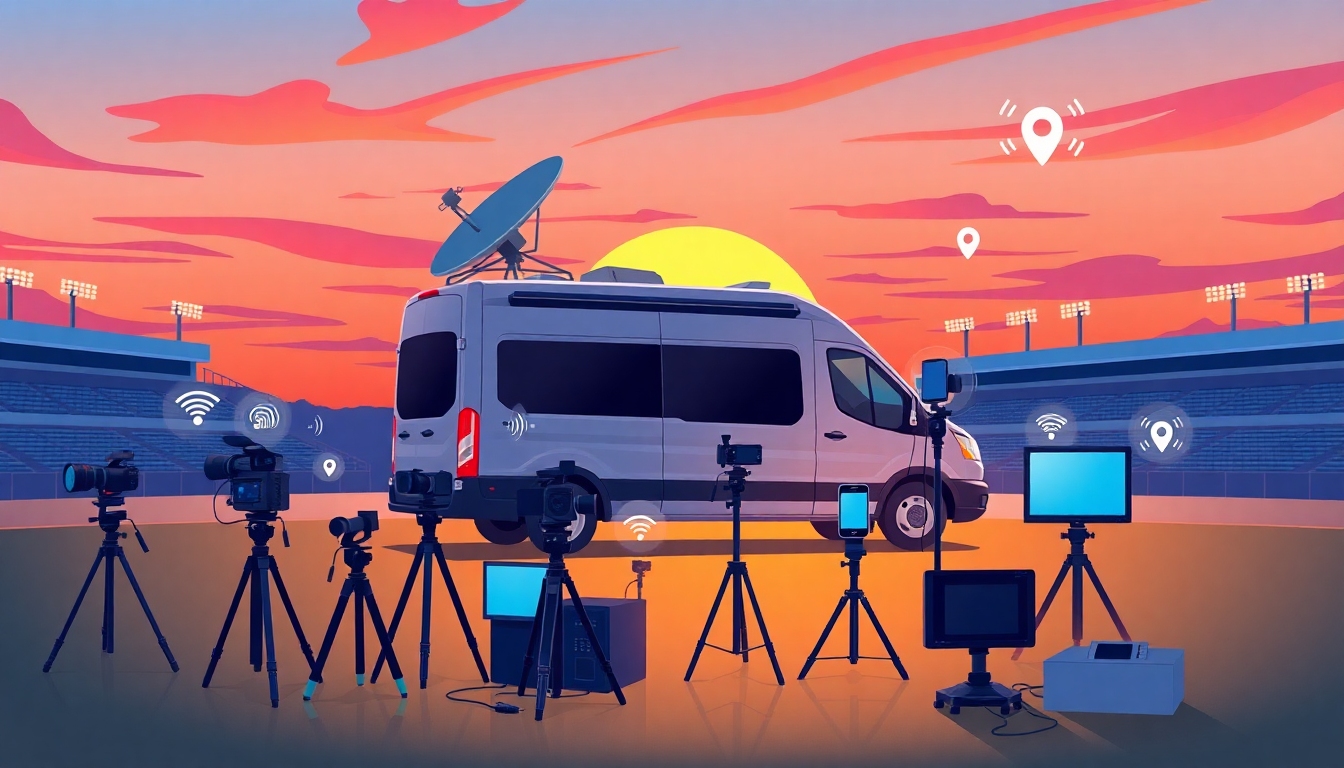
Broadcasting live from remote locations used to be the exclusive domain of major television networks with million-dollar budgets. Today, outside broadcast (OB) technology has become accessible to independent creators, educators, sports organizations, and media companies of all sizes. Whether you’re streaming a local sports event, hosting a concert, or delivering educational content from multiple venues, understanding OB fundamentals can transform your content strategy and open new revenue streams.
What is Outside Broadcasting?
Outside broadcasting refers to the production and transmission of live or recorded content from locations outside a traditional studio environment. Unlike studio-based production where everything happens in a controlled setting, OB involves bringing professional broadcast equipment to remote venues—sports stadiums, concert halls, conference centers, outdoor festivals, or anywhere your audience wants to see content created.
The core principle remains the same: capture high-quality video and audio from a remote location and deliver it to viewers through various distribution channels. Modern outside broadcasting has evolved beyond traditional TV networks to include streaming platforms, social media, and subscription-based services where creators can monetize their live content directly.
The Two Types of Broadcast Production
Understanding broadcast types helps you choose the right approach for your content goals.
Studio-Based Broadcasting
Studio broadcasting happens in a fixed, controlled environment with permanent equipment installations. Studios offer consistent lighting, acoustics, and production values but limit you to one location. This works well for regular shows, interviews, and controlled productions.
Outside Broadcasting
Outside broadcasting takes production mobile, allowing you to capture content wherever it happens. According to industry research from Allied Market Research, the global OB market is projected to reach $8.2 billion by 2031, driven by increasing demand for live sports coverage and streaming events.
OB splits into two main categories:
Full-scale OB productions use dedicated mobile units (OB vans) with multiple cameras, switchers, audio equipment, and transmission gear. These handle complex productions like multi-camera sports coverage or large concerts.
Fly-pack productions involve portable equipment cases that can be transported by regular vehicles and set up quickly. This approach works for smaller crews covering events, conferences, or location-based content series.
Essential Outside Broadcasting Equipment
Your equipment needs depend on production scale, but most OB setups share these core components:
Cameras and Lenses
Professional OB cameras range from compact cinema cameras to broadcast-grade systems with interchangeable lenses. You’ll typically need 2-6 cameras depending on coverage requirements. Sports productions often use 8-20 cameras to capture multiple angles simultaneously.
Video Switching and Mixing
A video switcher lets you cut between camera feeds in real-time, creating professional multi-camera coverage. Modern software-based switchers like vMix or hardware options like BlackMagic ATEM systems have made switching technology accessible at various price points.
Audio Equipment
Quality audio separates professional broadcasts from amateur productions. Your OB kit should include:
- Wireless and wired microphones for talent and ambient sound
- Audio mixers for balancing multiple sources
- Headphones for monitoring
- Cables, connectors, and backup batteries
Transmission and Encoding
You need reliable internet connectivity to stream content to your audience. Options include:
- Bonded cellular systems that combine multiple connections
- Satellite uplinks for truly remote locations
- High-speed fiber or ethernet when available
- Hardware encoders that compress video for efficient streaming
Power and Infrastructure
OB productions require portable power solutions, cable management systems, and sometimes generators for locations without reliable electrical access.
Pro Tip: Start with a scalable fly-pack setup rather than investing in a full OB van. You can expand your equipment as your production needs grow and revenue increases.
The Outside Broadcast Van: Mobile Production Hub
An outside broadcast van serves as a mobile production studio, housing all technical equipment and crew positions needed to produce professional content from remote locations. These specialized vehicles range from compact vans for small productions to large semi-trucks for major events.
What Makes an OB Van Different
Purpose-built OB vans include:
- Equipment racks secured for transport
- Multiple monitor walls for camera feeds
- Climate control to protect sensitive electronics
- Power distribution systems
- Communication infrastructure for crew coordination
- Dedicated workspace for directors, technical directors, and engineers
Should You Buy or Rent?
For most creators and small organizations, renting makes more financial sense than purchasing an OB van outright. Full-featured OB vans sell for $500,000 to $2 million depending on equipment and size.
Consider these alternatives:
Rental services provide fully-equipped vans with operators for $5,000-$25,000 per day depending on production complexity. This works well for occasional events or organizations testing OB capabilities.
Fly-pack ownership requires $50,000-$200,000 upfront but gives you complete control and lower per-event costs if you produce regularly. You transport equipment in standard vehicles rather than maintaining a specialized van.
Cloud production workflows are emerging as a cost-effective alternative, using cloud-based switching and encoding to reduce equipment needs at remote locations.
Planning Your First Outside Broadcast
Successfully executing OB requires careful planning beyond equipment selection.
Site Survey and Technical Assessment
Visit your broadcast location beforehand to assess:
- Power availability and requirements
- Internet connectivity options and backup plans
- Camera positions and sightlines
- Audio challenges (ambient noise, echo, wind)
- Crew access and equipment load-in paths
- Weather contingencies for outdoor events
Crew and Workflow
Define clear roles for your production team:
- Camera operators
- Technical director (switching)
- Audio engineer
- Graphics operator
- Production coordinator
- On-site talent or hosts
Smaller productions might have crew members handling multiple roles, but each responsibility needs an assigned owner.
Distribution Strategy
Determine how you’ll deliver content to viewers. Live streaming to your own platform creates direct audience relationships and monetization opportunities that broadcasting through third-party platforms can’t match.
Modern streaming platforms like Vidori’s solution for creators let you distribute live and on-demand content across web, mobile apps, and connected TV devices while maintaining complete control over subscriber relationships and revenue—without paying per-subscriber fees that make scaling expensive on other platforms.
After your live broadcast, convert recordings to on-demand content for your subscription library. This extends the value of every OB production beyond the live event itself.
Monetizing Outside Broadcast Content
OB productions represent significant investment in equipment, crew, and planning. Smart monetization strategies ensure sustainable operations:
Subscription access lets fans pay monthly or annually for live event access plus your entire content library. This works especially well for sports leagues, concert series, or educational organizations with regular programming.
Pay-per-view charges viewers for individual event access without requiring ongoing subscriptions. Major sporting events, special concerts, or exclusive conferences often use this model.
Hybrid approaches combine free promotional content with premium paid tiers. Stream lower-quality feeds or selected portions for free while offering full HD multi-camera coverage to paying subscribers.
The key is choosing a platform that doesn’t take a percentage of your hard-earned revenue. Traditional platforms charge 8-30% of subscription revenue plus payment processing fees. Vidori pricing starts at $99/month with zero revenue share—you keep 100% of subscriber payments regardless of your audience size.
Pro Tip: Use your monetization settings to create time-limited access passes for single events while offering discounted pricing for multi-event packages or season passes.
From Live Event to Long-Term Asset
One of the biggest advantages of modern OB is content reusability. Your live broadcast becomes permanent library content that continues generating revenue:
Highlight packages created from full-event recordings attract new subscribers who discover your content after the live event ends. Vidori’s AI agents can automatically detect key moments in your broadcasts and generate highlight reels, saving hours of manual editing time.
Series and seasonal organization helps subscribers navigate your content library. Group related events together—tournament rounds, concert tours, or conference sessions—so viewers can binge content just like they would on Netflix.
Multi-platform distribution extends your reach beyond your primary streaming platform. While you should own the primary distribution through your branded apps and website, strategically sharing clips on social media drives awareness and subscriber acquisition.
Learn more about organizing your growing content library in the catalog management documentation.
Key Takeaways
- Outside broadcasting brings professional production capabilities to remote locations, opening new content and revenue opportunities beyond studio limitations
- Equipment needs scale with your production ambitions—start with portable fly-pack setups before investing in full OB vans that cost hundreds of thousands of dollars
- Monetization matters: Choose streaming platforms with flat-rate pricing and zero revenue share to maximize returns on your OB investment
- Live events become permanent assets when properly recorded, organized, and offered as on-demand content to subscribers
- Planning separates successful OB from failures—conduct site surveys, test connectivity, and define clear crew responsibilities before event day
Launch Your Outside Broadcast Platform Today
Outside broadcasting represents the future of live content creation—bringing professional production values to the locations where compelling stories happen. Whether you’re covering local sports, streaming concerts, or broadcasting educational conferences, the technology has never been more accessible.
The missing piece for many creators isn’t equipment or technical knowledge—it’s a streaming platform that respects your work by letting you keep your revenue while delivering professional viewing experiences across every device your subscribers use.
Start your 14-day free trial with Vidori and discover how easy it is to build a subscription streaming platform that grows with your outside broadcast ambitions. No credit card required, no per-subscriber fees eating into your revenue, and all the tools you need to turn live events into sustainable subscription income.
Written by
Sarah Chen
Content creator and streaming industry expert. Helping creators build sustainable businesses with video.