Outdoor Broadcast: Complete Guide for Beginners
Master outdoor broadcast essentials: equipment, logistics, and monetization strategies to capture professional live events anywhere, despite weather and technical challenges.
Getting Started
Sarah Chen
March 1, 2026 · 9 min read
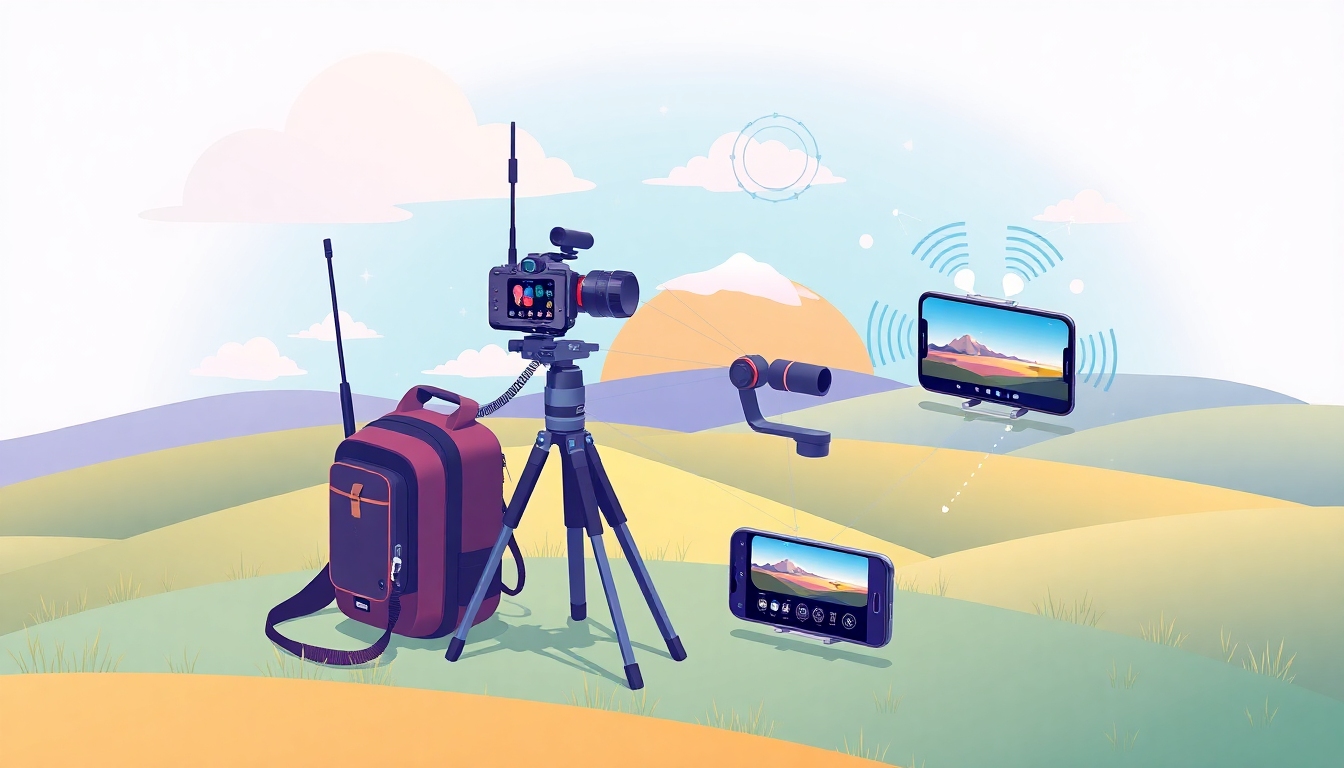
You’ve probably seen those massive production trucks parked outside stadiums or concert venues, bristling with satellite dishes and cables snaking everywhere. That’s outdoor broadcast (OB) in action—the art of capturing live events away from the comfort of a television studio. Whether you’re a sports league documenting championship games, a music creator filming outdoor performances, or an educator recording field research, understanding outdoor broadcast fundamentals can transform how you capture and share content with your audience.
The beauty of outdoor broadcasting is that it brings production capabilities to wherever your story happens. But it also introduces unique challenges: unpredictable weather, limited power access, network connectivity issues, and the logistical puzzle of transporting equipment. This guide breaks down everything you need to know to plan and execute successful outdoor broadcasts, from essential equipment to monetization strategies for the content you create.
What Is an Outside Broadcast?
An outside broadcast (often abbreviated as OB) is any live or recorded video production that takes place outside a traditional studio environment. According to Broadcast Bridge, OB productions account for nearly 40% of all professional video content creation, spanning sports events, concerts, news coverage, religious services, and educational programming.
The key characteristic of outdoor broadcasting is mobility. Instead of bringing talent and events to a fixed studio location, you transport production equipment to where the action occurs. This approach offers authenticity and immediacy that studio productions often can’t match—viewers experience events as they unfold in real environments.
Outside broadcasting can range from simple single-camera setups with a laptop encoder to elaborate multi-camera productions using dedicated outside broadcasting vans equipped with switching equipment, audio mixers, replay systems, and satellite uplink capabilities. The scale depends on your production requirements, audience expectations, and budget.
Pro Tip: Start small with outdoor broadcasting. A professional single-camera setup with good audio equipment often delivers better results than an overly ambitious multi-camera production where you’re stretched too thin managing equipment.
Types of Outside Broadcasting
Understanding the different types of outside broadcasting helps you choose the right approach for your content. Each type serves specific production needs and audience expectations.
1. Live Event Broadcasting
This is real-time transmission of events as they happen. Sports competitions, concerts, conferences, and religious services fall into this category. Live broadcasting requires robust internet connectivity and redundancy planning—if your stream goes down during a crucial moment, there’s no second take.
The Global Sports Broadcasting Market report shows that live sports broadcasting alone generates over $85 billion annually, demonstrating the massive audience appetite for live outdoor content.
2. Electronic Field Production (EFP)
EFP involves recording outdoor content for post-production editing and later distribution. Documentary filmmakers, nature content creators, and educational programs often use this approach. While you’re not constrained by live broadcasting pressures, EFP still requires careful planning for lighting, audio capture, and equipment protection in outdoor environments.
3. Electronic News Gathering (ENG)
ENG focuses on rapid-deployment journalism and breaking news coverage. This type prioritizes speed and mobility over elaborate production values. Creators covering events, conducting outdoor interviews, or documenting real-time occurrences use ENG techniques with lightweight cameras, wireless microphones, and portable transmission equipment.
Essential Equipment for Outdoor Broadcasting
Successful outdoor broadcast starts with the right equipment. Your gear needs to be portable, weather-resistant, and reliable under varying conditions.
Camera Equipment
Broadcast cameras designed for outdoor use offer superior low-light performance, extended battery life, and weather-sealing compared to consumer models. For multi-camera productions, ensure your cameras support genlock synchronization for seamless switching between sources.
Budget-conscious creators can achieve professional results with mirrorless cameras paired with external recorders. The key is choosing cameras with clean HDMI output, manual exposure control, and interchangeable lens support for adapting to different shooting scenarios.
Audio Capture
Audio quality often matters more than video quality for viewer retention. Invest in directional shotgun microphones for capturing specific sound sources, boundary microphones for ambient audio, and wireless lavalier systems for talent. Wind protection is critical—foam windscreens and furry wind muffs prevent unusable audio during breezy conditions.
Video Switchers and Encoders
A portable video switcher lets you mix multiple camera angles in real-time, creating dynamic productions that hold viewer attention. Modern software-based switchers running on laptops offer affordable alternatives to dedicated hardware units, though they require more powerful computers and careful workflow planning.
Hardware encoders convert your video signal into streamable formats for internet delivery. Look for encoders supporting H.264 or H.265 compression with adaptive bitrate streaming—this ensures viewers on different connection speeds receive optimal playback quality. Platforms like Vidori’s streaming infrastructure handle the distribution complexity once your encoder delivers the stream, including automatic transcoding to multiple resolutions.
Power and Connectivity
Reliable power is non-negotiable for outdoor broadcasts. Battery systems with sufficient capacity to run your entire production setup for 4-6 hours provide peace of mind. Portable generators work for extended productions, though they introduce noise considerations for audio capture.
Internet connectivity makes or breaks live outdoor broadcasts. Cellular bonding devices aggregate multiple cellular connections (4G/5G) for reliable upstream bandwidth. These systems typically provide 10-25 Mbps upload speeds—sufficient for 1080p streaming. Satellite uplink equipment offers connectivity in remote locations but introduces latency that affects viewer experience.
Weather Protection
Environmental protection extends your equipment lifespan and prevents production disasters. Rain covers for cameras, waterproof cases for electronics, and pop-up tents for control stations protect against precipitation. Extreme temperatures require additional considerations—batteries drain faster in cold, while electronics overheat in direct sunlight.
Advantages of Outside Broadcasting
Why go through the complexity of outdoor broadcasting when studios offer controlled environments? The advantages often outweigh the challenges.
Authenticity and Engagement
Outdoor content provides context and atmosphere that studios can’t replicate. Sports fans want to experience stadium energy. Concert viewers crave the festival atmosphere. Educational content gains credibility when filmed in relevant environments—a geology lesson at a rock formation outperforms the same content delivered against a green screen.
Research from Wyzowl’s Video Marketing Statistics indicates that authentic, location-based content generates 3.5x higher engagement than equivalent studio productions, particularly for younger demographics who value “real” experiences.
Cost Efficiency at Scale
While initial outdoor broadcast setup requires investment, it becomes cost-effective when producing multiple events. A sports league broadcasting dozens of games per season amortizes equipment costs across numerous productions. Compare this to studio rentals at $500-2,000 per day—outdoor capabilities pay for themselves quickly.
Monetization Flexibility
Outdoor broadcast content offers diverse revenue streams. Live pay-per-view events create urgency and scarcity. Recorded outdoor content populates subscription libraries with fresh material. Event replays and highlight packages extend content value beyond the initial broadcast.
Creators using streaming platforms with zero revenue share—like Vidori’s subscription solutions—keep 100% of subscription and pay-per-view income from outdoor broadcasts. This contrasts sharply with platforms charging per-subscriber fees or taking revenue percentages, where your outdoor broadcast success directly increases your platform costs.
Pro Tip: Record every outdoor broadcast, even if you’re streaming live. The VOD content becomes a revenue-generating asset for months or years after the event concludes. Archive broadcasts in your video catalog for easy subscriber access.
Planning Your First Outdoor Broadcast
Successful outdoor broadcasting requires meticulous pre-production planning. These steps minimize production day surprises.
Site survey several days before your broadcast. Test cellular signal strength at multiple locations. Identify power source locations. Note sun position throughout your shooting schedule to plan for changing light conditions. Document potential audio interference sources like traffic, construction, or HVAC equipment.
Create redundancy for critical systems. Bring backup cameras, extra batteries, duplicate encoding equipment, and multiple internet connectivity options. Murphy’s Law applies ruthlessly to outdoor broadcasts—equipment failures happen at the worst possible moments.
Weather contingency planning should address postponement criteria, equipment protection protocols, and alternative shooting positions if conditions deteriorate. Monitor forecasts daily leading up to your broadcast and communicate clearly with talent and crew about weather-related decisions.
Team communication systems prevent chaos during live productions. Wired or wireless intercom headsets let crew coordinate without shouting. For smaller productions, smartphone apps with private channels provide adequate communication at zero cost.
Test your complete signal chain from cameras through encoding to final playback before production day. Stream a test broadcast to your platform and verify playback quality on multiple devices. This reveals technical issues when you still have time to solve them.
Delivering Outdoor Broadcast Content to Viewers
Capturing great outdoor content is only half the equation—delivering it to viewers completes your broadcast workflow. Modern streaming platforms handle encoding, transcoding, content protection, and multi-device delivery without requiring technical expertise.
Adaptive bitrate streaming automatically adjusts video quality based on each viewer’s connection speed. A viewer on fiber internet gets 1080p or 4K quality, while someone watching on cellular data receives optimized 480p or 720p streams—both enjoy uninterrupted playback. Vidori’s streaming infrastructure handles this transcoding automatically, generating eight resolution options from your source stream.
Global content delivery networks (CDNs) cache your outdoor broadcasts across hundreds of servers worldwide, reducing latency and ensuring smooth playback regardless of viewer location. This geographic distribution matters tremendously for live events where simultaneous viewership spikes could overwhelm single-server setups.
Push notifications alert subscribers when your outdoor broadcast goes live or when new outdoor content becomes available. This engagement feature helps you build audience anticipation for upcoming events and drives immediate viewership for live broadcasts.
Key Takeaways
- Outdoor broadcasting brings production capabilities to real-world locations, offering authenticity that studios can’t match
- Three main types exist: live event broadcasting for real-time coverage, EFP for recorded outdoor content, and ENG for news gathering
- Essential equipment includes weather-resistant cameras, quality audio gear, video switchers, reliable encoders, power systems, and cellular bonding for connectivity
- Outdoor broadcasts deliver superior engagement, cost efficiency at scale, and flexible monetization through pay-per-view, subscriptions, and VOD libraries
- Successful outdoor production requires detailed site surveys, equipment redundancy, weather contingency planning, and complete signal chain testing before broadcast day
Start Broadcasting from Anywhere
Outdoor broadcasting opens creative possibilities limited only by your imagination and planning. The technical barriers that once restricted live outdoor production to broadcast networks with million-dollar budgets have disappeared—today’s cameras, encoders, and streaming infrastructure let independent creators deliver professional outdoor broadcasts to global audiences.
Whether you’re streaming fitness classes from parks, broadcasting sports tournaments, documenting outdoor adventures, or teaching from field locations, outdoor broadcast capabilities transform your content library and revenue potential.
Ready to monetize your outdoor broadcasts without revenue share fees? Vidori’s streaming platform starts at $99/month with zero per-subscriber costs—your outdoor broadcast success increases your audience, not your platform expenses. Start your 14-day free trial and stream your first outdoor broadcast this week.
Written by
Sarah Chen
Content creator and streaming industry expert. Helping creators build sustainable businesses with video.